
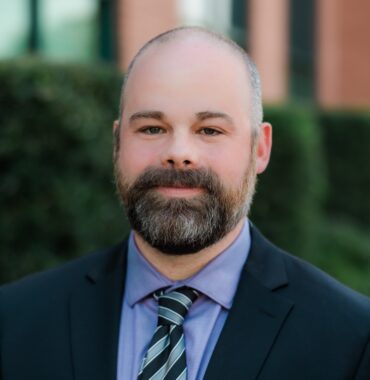
Senior Project Manager, Confidence Pharmaceutical Research
Jason Thompson didn’t plan a career in clinical research. In fact, when he graduated from college, he didn’t know it was a career option.
He was working in a laboratory when his contract ended and found himself searching for his next role. Then a CRO found his CV and called him.
“I didn’t actually know clinical research was a field. They don’t tell you that in school.”
He went to the interview, got the job, and discovered an industry he loved. Twenty years later, he has never left clinical research.
Today, Jason is a Senior Project Manager at Confidence Pharmaceutical Research, bringing a career that has taken him through data management, clinical monitoring, TMF, regulatory, project management, business operations and business development. That breadth of experience has shaped one of his greatest strengths: understanding how all the different pieces of a clinical trial fit together.
Learning the trial from the inside out
Early in his career, Jason had the opportunity to wear a lot of different hats.
He worked in data management, monitored sites, supported regulatory and TMF activities, developed study documents and worked across studies from startup through closeout. At one point, his hybrid clinical operations role involved as many as seven concurrent studies across 30–50 domestic and international sites.
Over time, that experience became increasingly valuable.
Clinical trials depend on many specialized functions, but Jason believes understanding the connections between those functions is just as important as understanding the individual pieces.
“If you don’t understand how it fits together, then you don’t understand why your piece has to be a certain way.”
For someone starting a career in clinical research, his advice is simple: get exposure to as much as possible.
Learning how different functions work helped Jason understand where he fit best, but it also taught him how one decision or delay can affect everything that comes next. That perspective has become particularly important in project management, where successful delivery depends on coordinating people who may see the same study from very different angles.
The hub of the project
As a Senior Project Manager, Jason is ultimately responsible for bringing those pieces together.
He oversees project deliverables and budgets while working across functions to make sure teams have the resources, information and processes they need to deliver. He also serves as the connection between the internal project team and the client.
His own description is straightforward:
“I’m the linchpin for the project… everything kind of runs through me. I’m that hub.”
But Jason’s approach isn’t simply about keeping everything moving. He is constantly looking at how the work itself can be improved.
His career has given him extensive experience in process optimization. Before joining Confidence, he helped redesign bidding and pricing processes, developed an automated pricing tool, built data infrastructure spanning more than 400 ongoing studies, and helped implement resourcing technology supporting 1,600 staff.
That instinct to look at the entire system and find a better way through it remains central to how he manages studies today.
Adapt, solve, pivot
Jason is comfortable when things don’t go according to plan.
In fact, that’s part of what he enjoys about clinical research.
“I couldn’t do the same thing every day, day in and day out. It’s too mind-numbing to me.”
He prefers a dynamic environment where every project presents a different combination of challenges, and where the solution that worked yesterday may not necessarily be the right one tomorrow.
That is also one of the reasons Confidence appealed to him.
Jason had spent 17 years with the same organization before changes in ownership and leadership eventually led him elsewhere. After a brief move into business development at another CRO, he joined Confidence, where he found both the culture and the working environment he had been looking for.
For Jason, being part of a smaller global CRO provides room to adapt while still operating within the regulatory and quality frameworks clinical research requires.
He saw the value of that flexibility firsthand when a client needed to launch a study on an exceptionally tight timeline. Rather than following the usual process exactly as it had always been done, Jason and the team reconfigured how activities were approached to accelerate the launch.
The project was successful, but what mattered to Jason was what made that success possible: the ability to assess the situation and adapt the process to what the study and client actually needed.
His approach when a problem appears?
“Let’s solve it this way and see how it works. And if it doesn’t work, let’s pivot, pivot, pivot until we get what we need.”
When the data became real people
Jason’s first clinical research experience was in pediatric oncology.
Once he began working with sites and reviewing medical records, something changed. The numbers and data he had been working with became connected to real children and families facing serious disease.
For many patients entering oncology trials, established treatment options had already been exhausted.
That experience helped Jason understand the significance of what happens behind every data point and every study milestone.
Later, his work in vaccines and infectious diseases gave him another perspective on clinical research impact. He worked directly on Zika studies and served as a project manager on one of those programs. He also worked within an organization involved in responding to major infectious-disease outbreaks.
Those experiences allowed him to see something he had missed while working in a laboratory: what happens after the research.
“When you’re in clinical trials… you get to see these drugs actually make it out to market and publish the results of the impact that they’re having.”
For Jason, that connection between the work being done today and the treatments people may have tomorrow is one of the things that keeps clinical research meaningful.
Making the work easier, not just faster
Ask Jason about his clinical research “superpower,” and he comes back to the big picture.
“I am extremely good at seeing the big picture and kind of optimizing everything that it takes for us to get there to complete the picture.”
On a current Phase III program, for example, Jason was able to look at processes used during Phase II and identify what needed to change before scaling them for a much larger study. The resulting tools, processes and tracking systems helped support successful delivery at the Phase III level.
But efficiency, for Jason, isn’t simply about doing things faster.
It is also about eliminating work that doesn’t need to be done.
“I’m always looking for an easier way to do it, because I don’t want anybody to do more than they have to.”
As volume increases, unnecessary tasks multiply. Jason sees thoughtful process design as a way to protect both the study and the people delivering it.
“I don’t want anybody to burn out. I want everybody to enjoy what they’re doing. And have the best tools possible.”
That philosophy fits naturally with his role at Confidence, where the Senior Project Manager is responsible not only for project delivery but also for cross-functional coordination, resource planning, issue resolution, sponsor communication and supporting and mentoring project teams.
The bridge between today and what comes next
After two decades in the field, Jason still finds the future of clinical research exciting.
Teams working in clinical development often see potential therapies years before they become visible to the general public. For Jason, being part of that process means having an early view of where medicine may be heading, from more personalized treatments to progress in diseases where options have historically been limited.
He sums it up simply:
“Clinical research is the bridge between what we have today and what we will have in the future.”
Still moving
That preference for movement isn’t limited to Jason’s work.
Outside clinical research, he enjoys reading, music, concerts, the outdoors, spending time with his family and dogs, and generally, as he puts it, “moving and doing things.”
And for the past 30 years, one of those things has been lacrosse.
He hopes to continue playing for as long as he can.
Perhaps that is an appropriate match for someone whose professional life has also been defined by movement: seeing the field, understanding how the pieces fit together, adapting when circumstances change, and always looking for the best path forward.